8:00 AM to 4:00 PM
Marco Polo Ortigas Manila, Pasig City
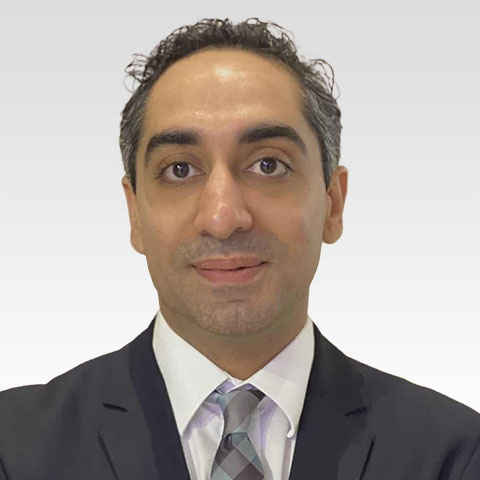
Dr. Mostafa Anwar is a distinguished figure in the field of endodontics, serving as a Lecturer of Endodontics at The British University in Egypt. With a profound commitment to education and skill development, he has also been an International Visiting Lecturer at numerous dental institutes around the globe.
Dr. Anwar holds a Master's Degree in Endodontics from Ain Shams University, Egypt, which he earned in 2015. Further enhancing his expertise, he is a Certified Healthcare & Hospital Management Specialist, having completed his diploma at The American University in Cairo.
With 17 years of clinical experience, Dr. Anwar has dedicated the last 13 years exclusively to the field of endodontics. He is renowned as a Micro-Endodontics Specialist, offering private practice services in Egypt, Kuwait, and the UAE. His practice is meticulously focused on Conventional, Surgical Endodontics, and Restorative Dentistry.
Dr. Anwar's passion for teaching is evident in his role as an International Endodontics Lecturer and Workshops Instructor for over 15 years. He has been instrumental in private continuous education programs and has contributed significantly to teaching at various international dental institutes. His efforts in guiding and monitoring have impacted more than 70,000 dentists worldwide through hands-on courses.
As a Keynote Speaker, Dr. Anwar has shared his insights and expertise at numerous international dental conferences, spanning over 30 countries. Since 2016, he has also emerged as a prolific Educational Content Creator, amassing a following of over 450,000 on various social media platforms. His engaging content and educational resources continue to inspire and educate dental professionals globally.
Dr. Mostafa Anwar's career is a testament to his dedication to the advancement of dental education and practice, making him a respected and influential figure in the field of endodontics.
The management of complex endodontic cases requires a combination of advanced techniques, clinical skills, and evidence-based protocols.
Challenges such as intracanal separated instruments, ledges, gutta-percha removal, perforation repair, and root canal calcifications demand a systematic approach.
Recent literature highlights increasing complexities in root canal morphology, including severely curved roots, open apices, and multiplanar canal curvatures. In such cases, specially designed rotary files combined with minimally invasive preparation techniques provide safer and more predictable outcomes.
The integration of magnification, ultrasonics and CBCT has significantly enhanced the ability to treat complex cases while preserving dentine through a conservative approach. A well-defined protocol is essential to guide clinicians through sequential steps that minimize procedural errors, reduce the risk of instrument separation, and enable the effective removal or bypass of fractured files using ultrasonics, grasping instruments, and modern rotary systems—all under magnification.
Furthermore, clinicians should optimize the use of bioceramic materials and must be equipped to manage apexification, repair perforations and perform 3D obturation in challenging anatomies.
By combining microscopes, CBCT, ultrasonics, bioceramics, and controlledmemory rotary files within structured, evidence-based protocols, clinicians can achieve more efficient, predictable, and biologically respectful outcomes. Ultimately, the “root-to-crown journey” emphasizes that technology serves as an enabler, but the clinician’s expertise remains the decisive factor in ensuring longterm success.
Bioceramic materials have transformed endodontics by combining excellent biological properties with advanced clinical versatility. Their bioactivity, biocompatibility, and sealing ability make them ideal for achieving 3D obturation, repairing perforations, and managing open apex cases. Recent advancements in obturation materials and evidence-based protocols have addressed limitations of traditional gutta-percha, which lacks adhesive properties and may leave microspaces prone to reinfection.
Bioceramic sealers provide superior adaptation to canal walls, dimensional stability, and potential chemical bonding with dentine supporting a true monoblock concept, while bioceramic putty extends applications to challenging cases through inducing hard tissue formation, including perforations, open apices and regenerative procedures. The quality of obturation can be reliably assessed clinically and radiographically, including with CBCT imaging.
This session will explore practical techniques using bioceramic sealers and putty, emphasizing their role in enhancing treatment predictability, simplifying procedures, encouraging periapical healing and supporting long-term endodontic success even in teeth with extensive pathologies.
Attendees will gain insights into integrating these materials into routine and complex cases, highlighting the synergy of modern materials, minimally invasive approaches, clinical expertise to ultimately shape the future of biologically driven endodontics.